In December 1972 the crew of Apollo 17 photographed the whole Earth from space. The picture, known as the Blue Marble, became one of the most reproduced images of the planet and an icon of ecology. Mapping Blue Marble asks less what the image shows than what it does.
An image as technology
We treat the Blue Marble as a technology of imaginary. Folding a planet into a single picture makes it look like one object, seen from nowhere. Ecological crisis then becomes something to measure and manage from a distance, through numbers and satellite views, while the situated experience of those who live on the planet, and the question of who gets to stand at the observer's position, drop out of the frame.
Exploding the image
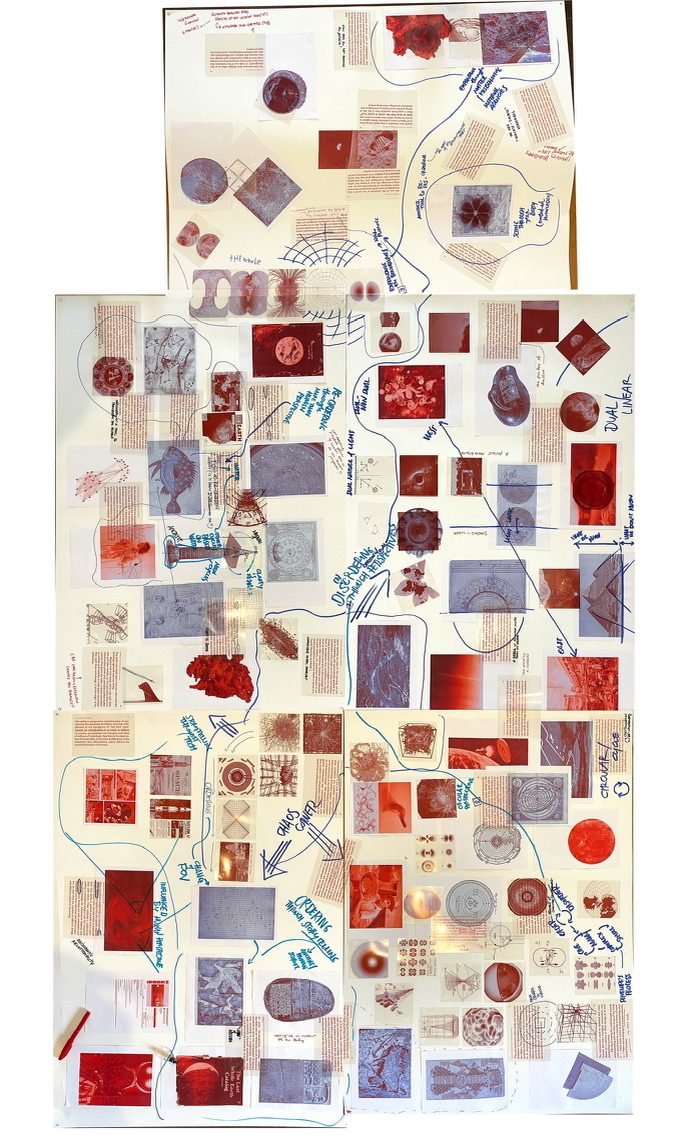
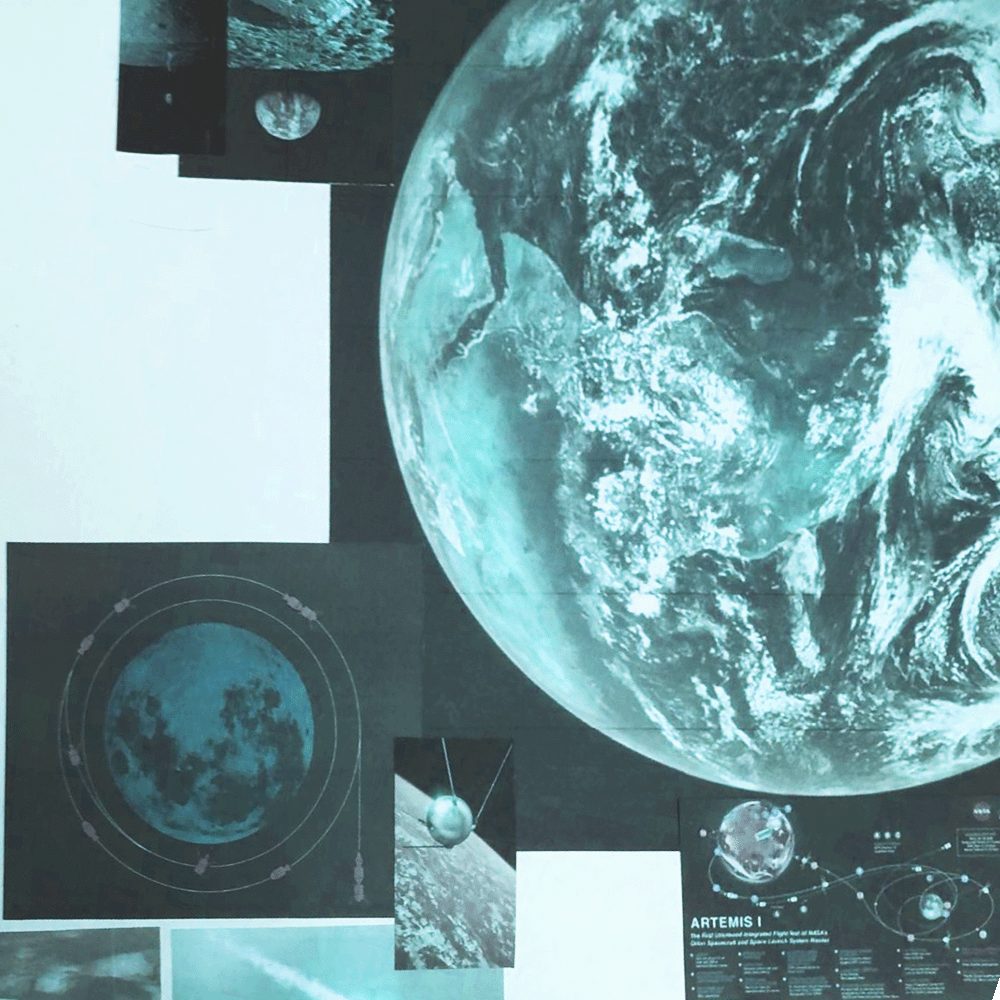
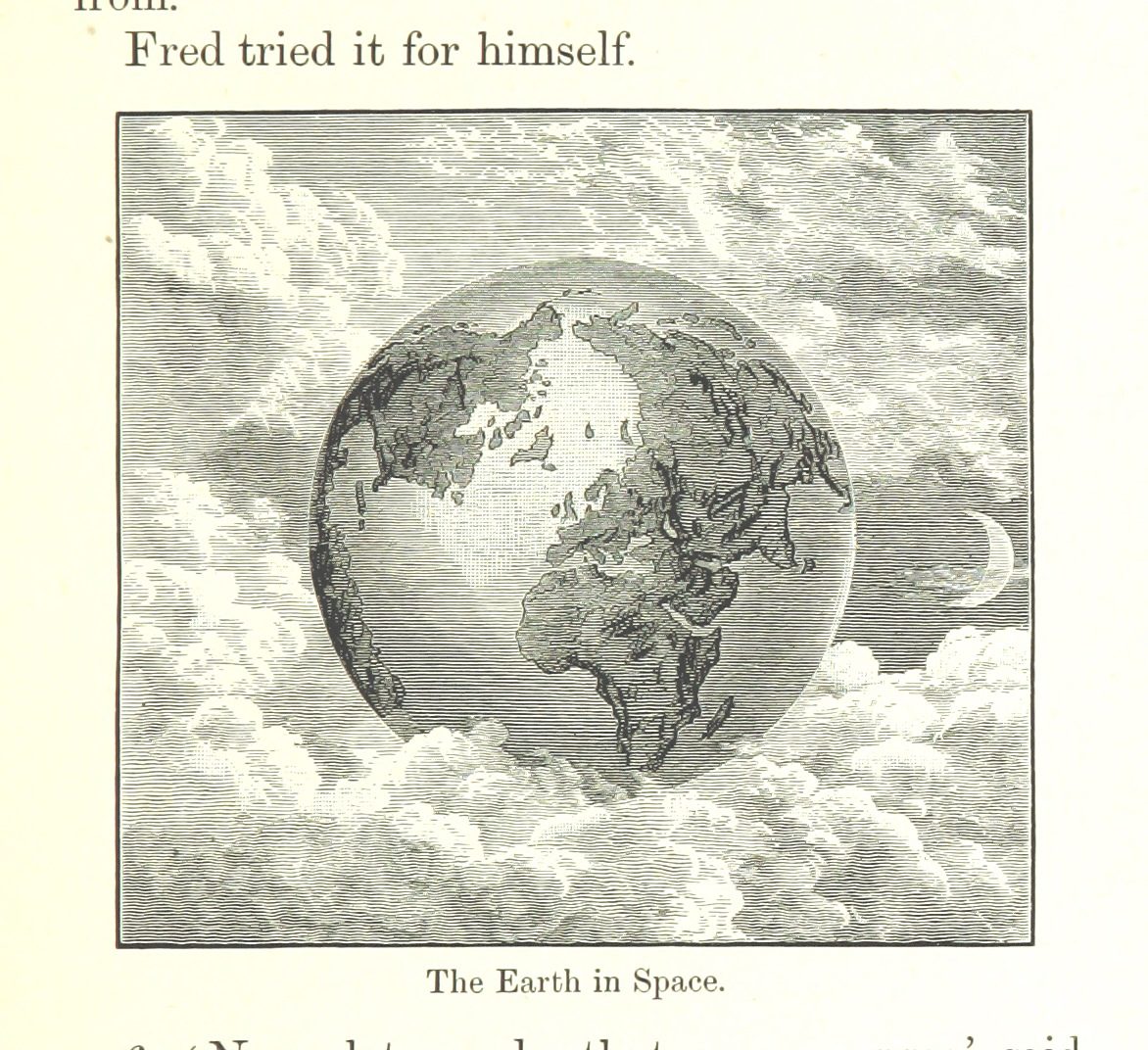
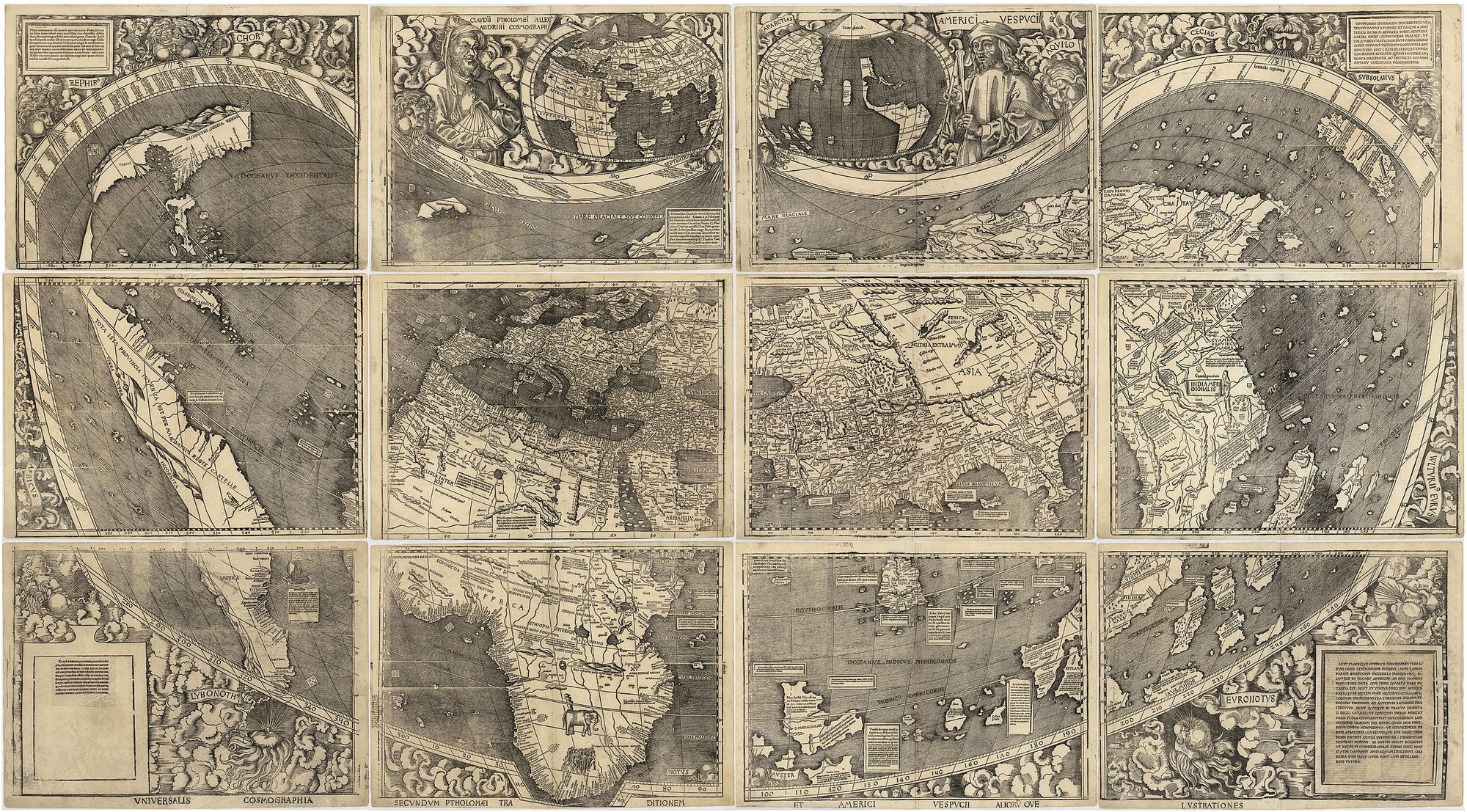
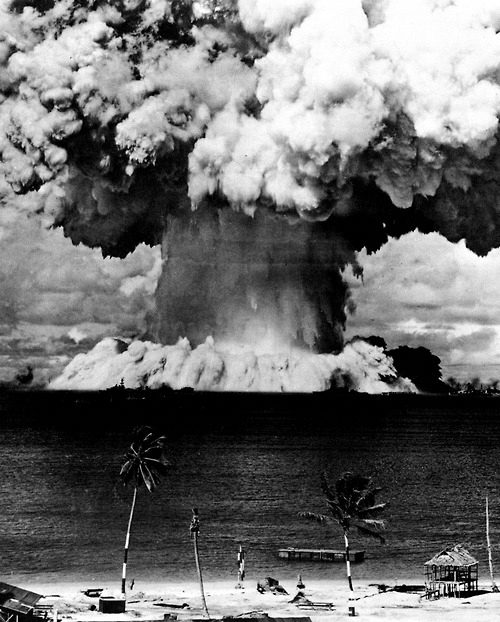
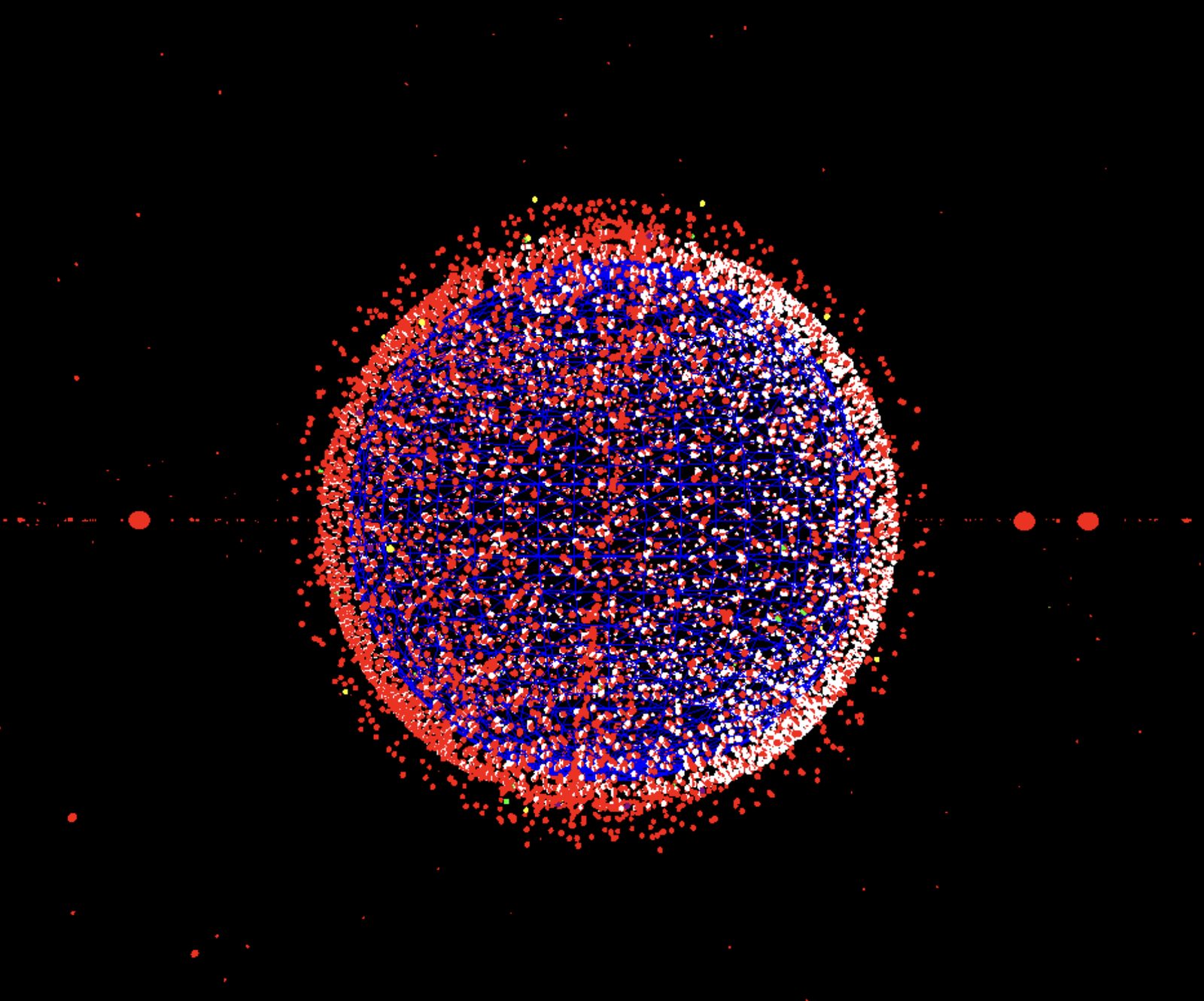
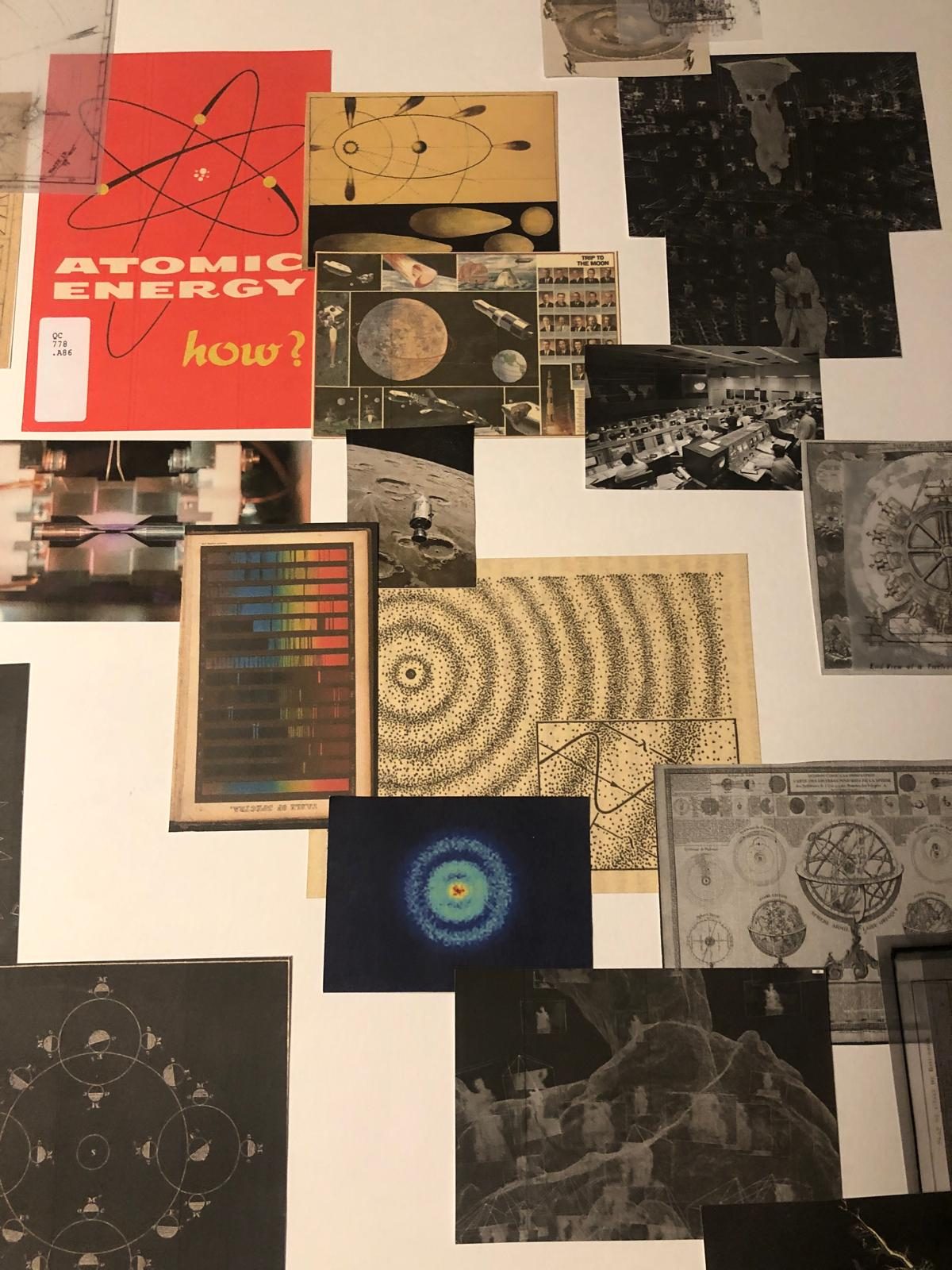
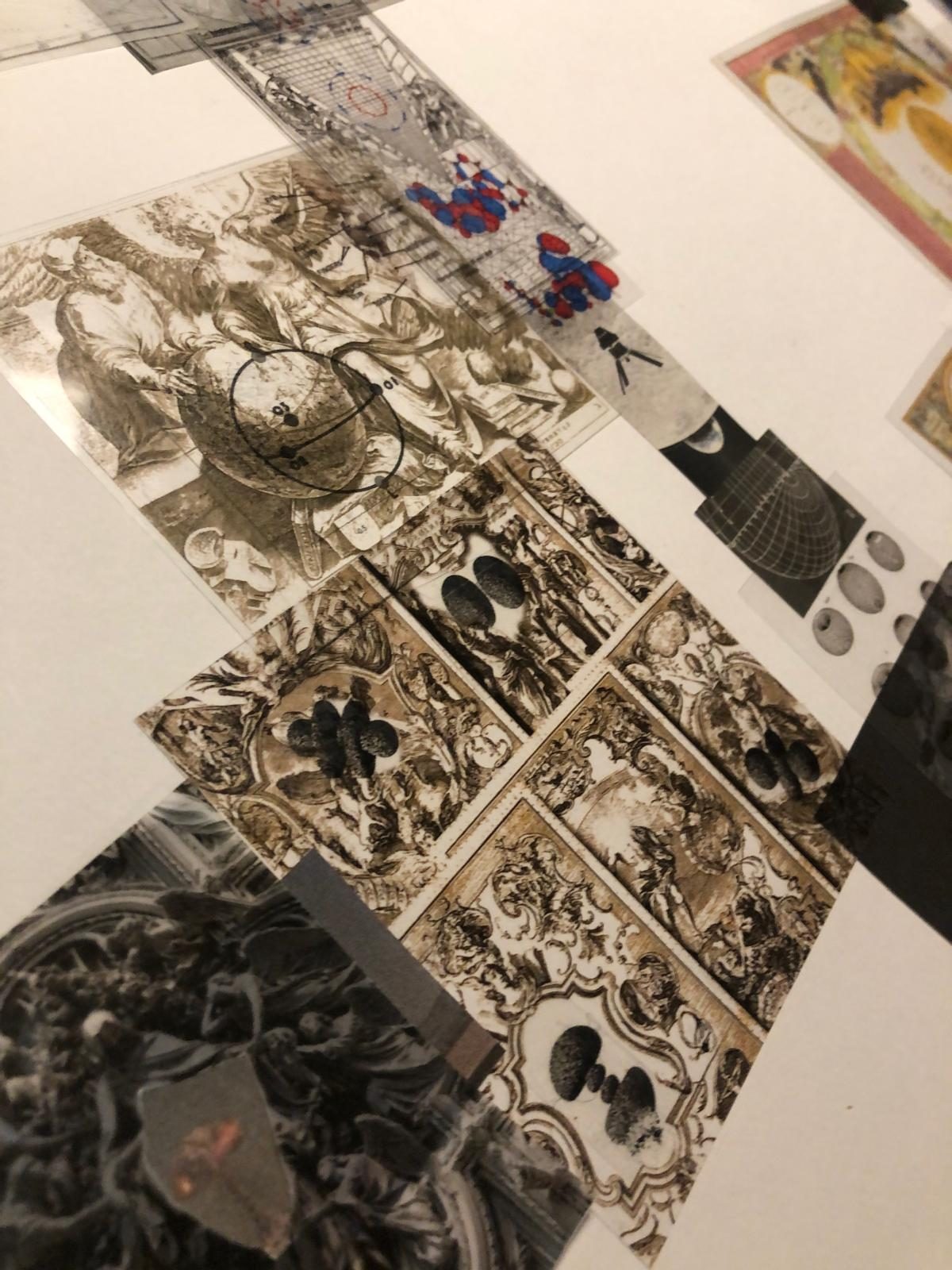
Our method is to take the image apart. We follow it through space and time, into the infrastructures, histories, economies, politics and ideologies that had to come together for it to exist, and lay the pieces side by side: engravings of the Earth in space, early world maps, nuclear tests, atomic-age diagrams, orbital data. The project is framed as a phase-space inquiry, a way of holding many states of the image at once instead of fixing it in one.
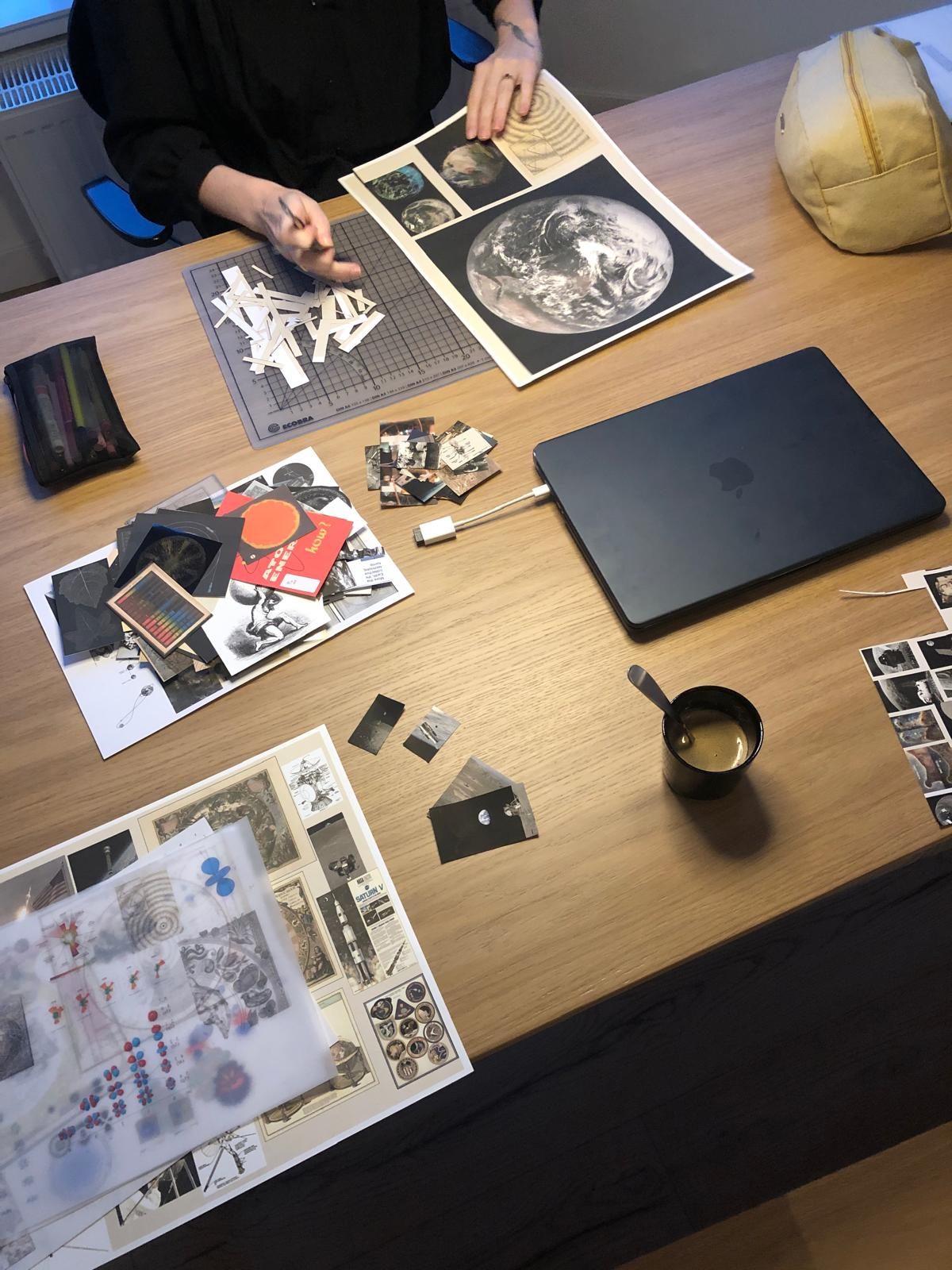
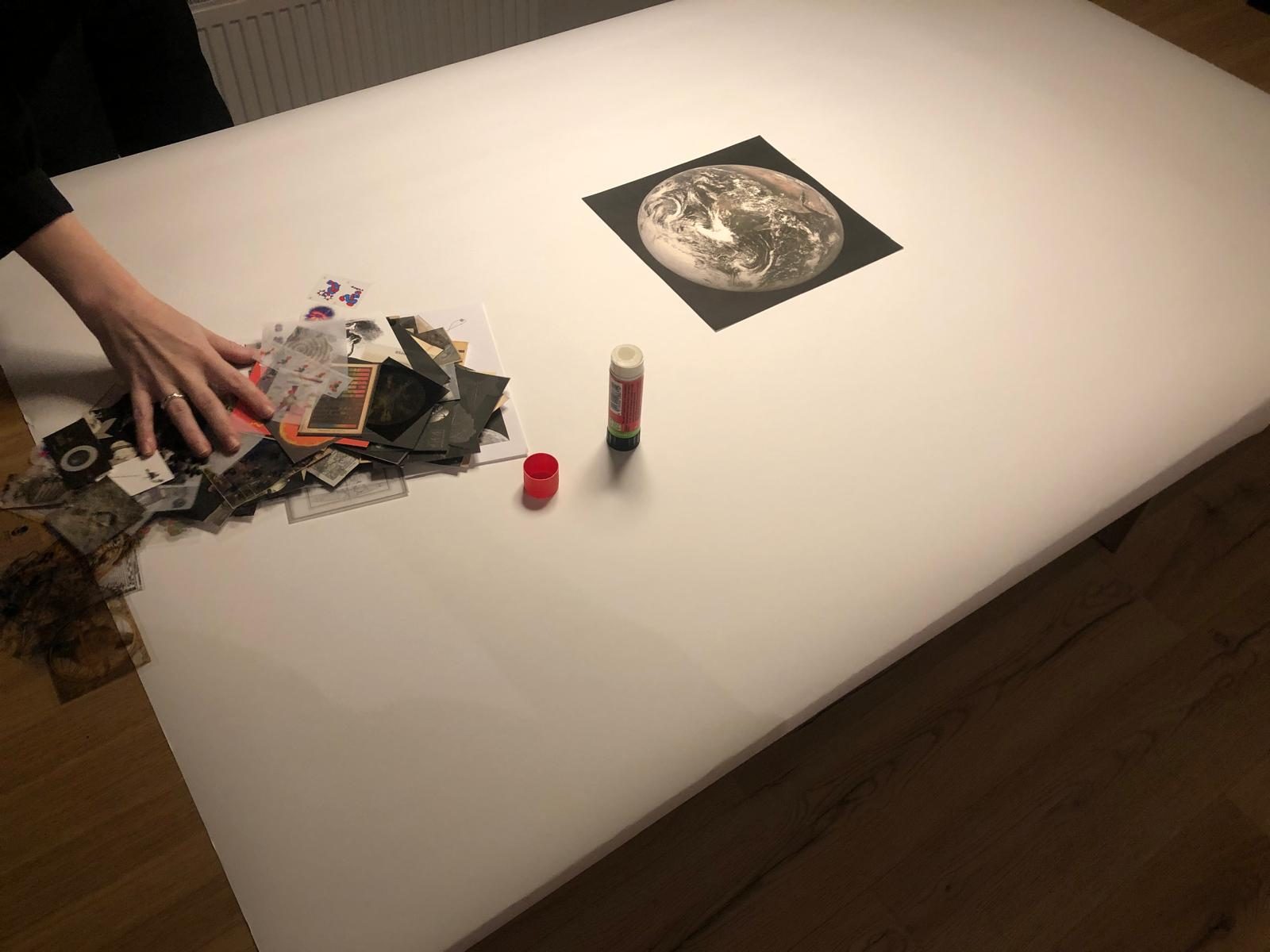
Collage is the tool. Material is printed on transparent paper and superimposed, so that the resulting chimera keeps several perspectives in view and invites discussion, note-taking and diagramming. The photos above show some of this work in progress.
Orbital data is one of these layers. A few seconds after the page loads, the active satellites currently circling the Earth appear behind the title, each at its real position right now, drawn from public orbit data published by CelesTrak. The button under the title switches them off and on.
Summer camp 2025
In August 2025 the project became the frame for Beyond the Blue Marble, a week-long summer camp with Baltan Laboratories in Orvieto and at Lake Bolsena. Participants followed lectures on planetarity and on Etruscan heritage, grew chemical gardens in a workshop with Laura Tripaldi, and built a large collaborative collage from historic and contemporary imagery and their own work. At the end of the week the group turned the ideas into installations and presentations, from a proposal for Dutch Design Week to an ephemeral object of ice, rock and metal contemplating meteorites.
Related
- Cnidarian Economics: a sibling project on finance and other-than-human intelligence